
When you put in the effort to organize your pantry, you save time and money in the long run. You’ll know exactly what you have, and where to find it when you need it.
I was recently watching the Home Edit on Netflix—the episode where they show Khloe Kardashian’s impossibly organized pantry—and wow. The best way to describe it is a cross between a candy shop and an IKEA showroom: colorful and perfectly functional.
Of course, my real-life panty is nowhere near as big, and that’s OK. The good news is you don’t have to be rich to have gorgeous and functional spaces in your home. Instead, all you need is to know how to organize, and I’ve got a few tips to help you get started.
How To Organize Your Pantry
Here are ten pantry organization ideas that will add function and beauty to your kitchen.
1. Create zones for different types of food
Baked goods, breakfast items, condiments, canned food, dry goods, and anything else you keep in the pantry should have its own designated space. Ensure everyone in your family understands the zones to help keep everything in the correct place.
You could help them out by adding labels to your shelves or containers or using washi tape to make the zones visual. If you’re feeling creative, you can create custom labels, or there are a lot of beautiful options on Etsy.
2. Store fresh food correctly
Some fresh food such as onions, garlic, and any root vegetables are best stored in the pantry where it is cool and dry. There are tricks that you can use to keep these items fresh as long as possible. Onions and potatoes, for example, spoil faster when stored together.
3. Store items for different cuisines together
I recently experimented with a home meal delivery service. I really liked how all the ingredients for each recipe are stored in individual bags (excluding pantry staples like oil, etc.). After a busy day, it’s nice to have everything organized for you.
Unfortunately, using this service regularly isn’t in my budget, but it did inspire me to create themed bins in my pantry. For example, canned tomatoes, pasta, and pickled artichokes go into an “Italian box”, while soy sauce, tofu, and coconut milk live in the “Asian basket”.
It’s a simple change, but it makes things so much easier when I need meal inspiration. I just pull out a box and start cooking!
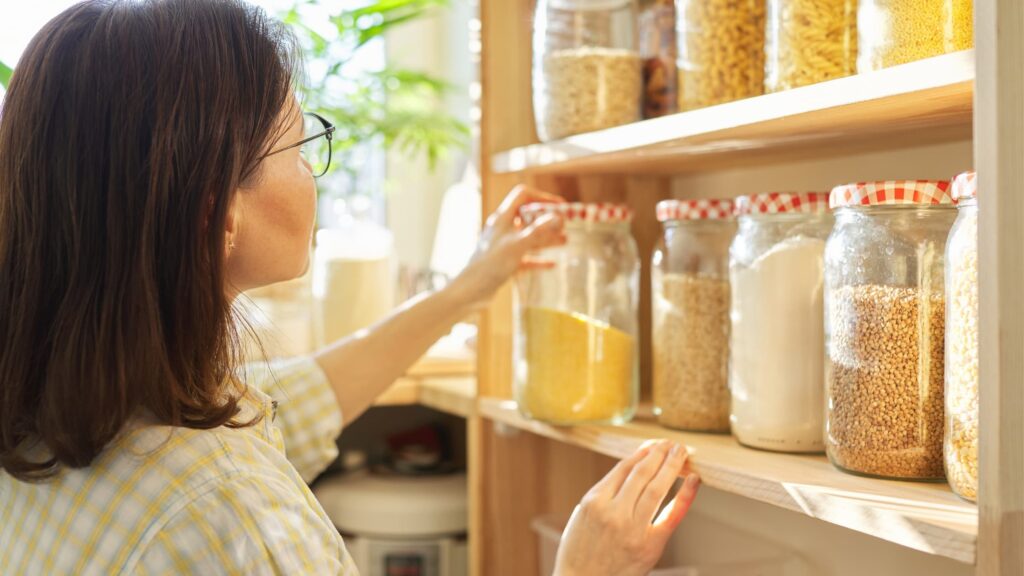
4. Become a pro at stacking
What to know the secret to creating a functional pantry that:
- Holds a lot of food without looking overstuffed?
- Is easy to navigate (you can find what you need when you need it)?
- Looks absolutely gorgeous?
Use clear bins and containers which can stack on top of each other, and label them clearly. You can also use baskets with wires that allow them to hook to the bottom of your shelves, giving you double the space to store things that won’t stack well.
5. Note expiration dates
If we’re completely honest here, there are probably more than a few expired cans and jars of food taking up space in our pantries. And yes—I know there’s some debate about “use by” versus “best by” dates—but regardless, it makes sense to eat older food sooner rather than later.
The solution is to do rotate your food and organize by expiry date. This will encourage you to see it and find a use for it before it goes to waste.
6. Make all your condiments visible with a lazy Susan
Lazy Susan’s have suffered from a terrible reputation after reaching the peak of popularity in the ’80s. But why? The truth is they are extremely useful tools that create space and accessibility In your pantry. Condiments are a great example: storing one in front of the other on your shelf is a recipe for forgetting what you have and letting things go bad before you use them.
So shake off the stigma and embrace the vintage vibe. Pop a Lazy Susan in your cupboard and use it to store condiments, spices, spreads, and more. It’s so user-friendly that even your kids (or husband) can put things back in the right place without a fuss.
7. Give kids their own space
Speaking of kids, why not create a dedicated shelf (at a low level) for their snack zone? You can use baskets and fill them will healthy snacks that the kids can just grab. This gives kids a greater degree of independence and means they are less likely to ask for snacks from you ALL the time.
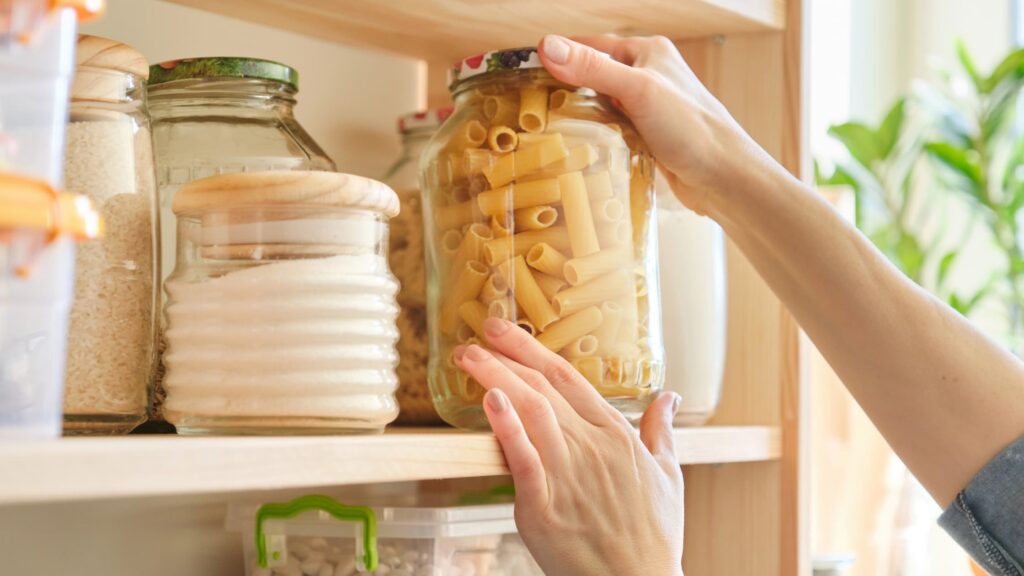
8. Install skinny shelves in forgotten corners
We all need more storage, right? Well, if you poke your head around your pantry, you will probably notice quite a few underutilized spaces which don’t have any shelving.
Look for corners where you could stack a row of bottles, or add some extra shelves to the insides of doors which could hold spices or other small pantry items. Stick to thin shelves (so you can store things one item thick), and you’ll be surprised by how functional they are.
9. Think about what you’re buying
Oh boy—one of my guilty pleasures is browsing exotic online recipes (I’m looking at your Pinterest!). I get all excited, rush out to the shops, and buy a TON of random ingredients…many of which never get used again.
Because let me be honest, I’m not a master chef. Instead, I’m a busy mom trying to keep my family fed without spending hours (and hundreds of dollars) in the kitchen. If you can relate, then here’s some tough love.
Put down the fancy recipes and stop buying random ingredients that you never use. Instead, stock your cupboards with versatile ingredients that suit the kind of dishes you actually cook.
Of course, there’s no harm in branching out every once in a while, but if you plan on buying something different for a specific recipe, make sure you plan a few other meals where you can use it.
10. Create a system for your small appliances
Our small appliances, many of which collect dust in the furthest, darkest corners of our cupboards, are among the most challenging things to keep neatly organized. It’s an eyesore, and you never end up using them because it’s such a pain to get them out.
A straightforward solution to this problem is to store your small appliances on plant rollers at the bottom of your pantry. Or use a roll-out bar cart to store small appliances, that you can easily pull out and tuck away as you need to. (IKEA has some great trolleys if you have room in your pantry.)
Ultimately, the art of getting organized is thinking creatively about your space. Pay attention to how you use your pantry, where you’re wasting time or getting frustrated, and then look for outside the box solutions to make things simpler.
What are some of your favourite pantry organizations tips? Let us know in the comments!
Good stuff here — the examples made it click for me. Found a comparable resource at acefeexam.com recently.